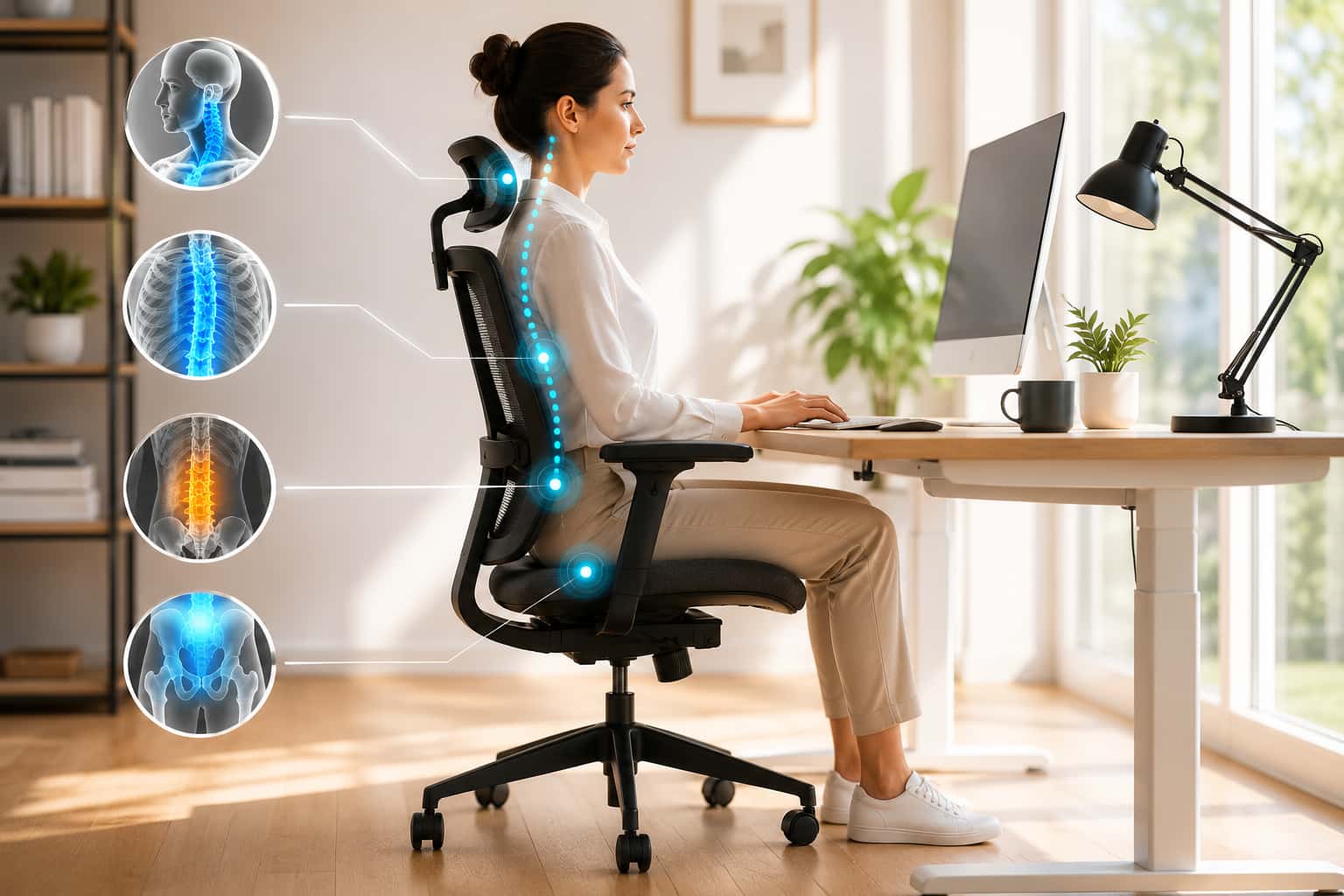
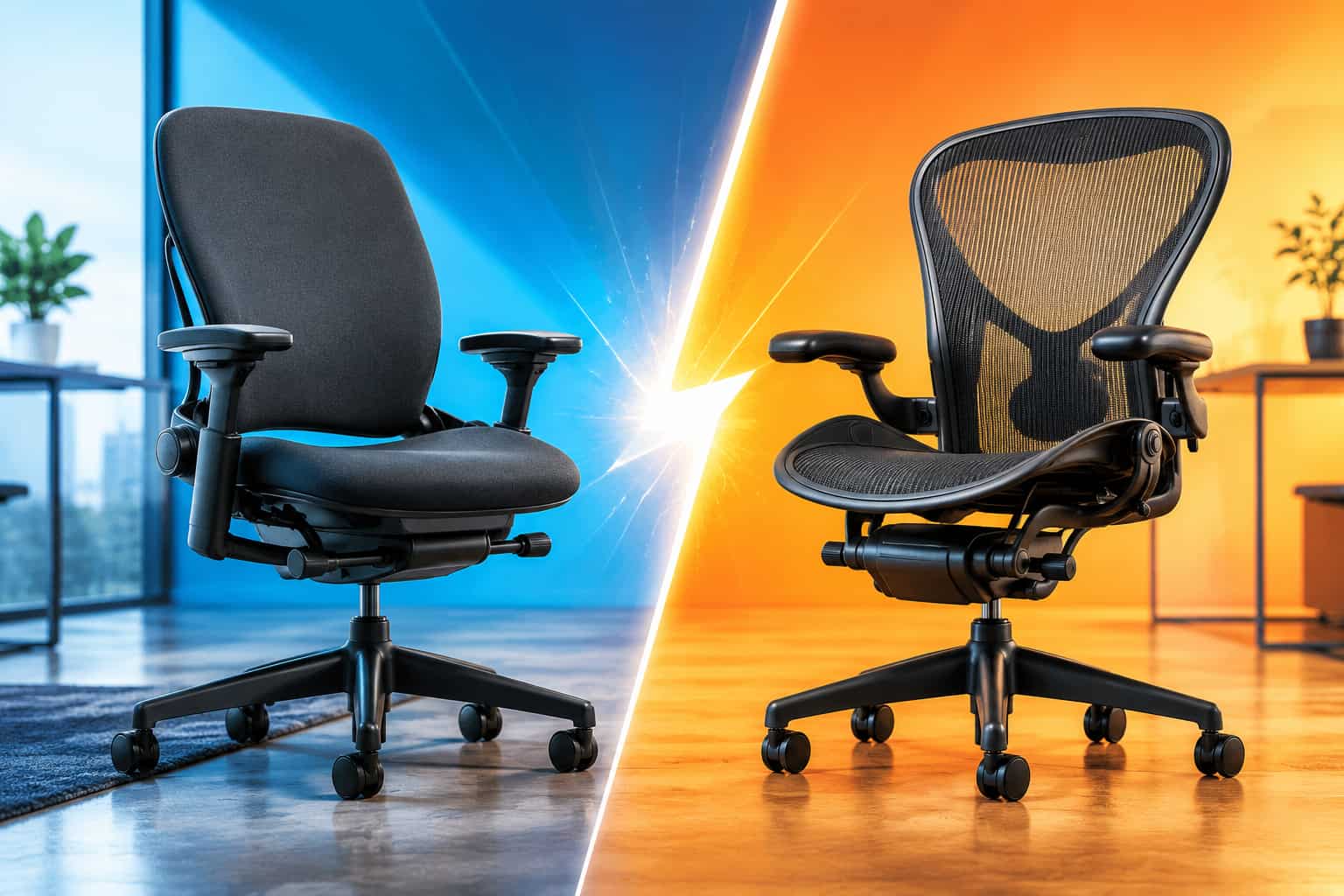
Steelcase Leap vs Herman Miller Aeron: Which Chair Should You Buy?
Both the Steelcase Leap and the Herman Miller Aeron cost over a thousand dollars and are recommended by ergonomics professionals worldwide. But they are built around completely different design philosophies. This comparison tells you exactly which one is right for your body, your work style and your budget.
Our Top Picks
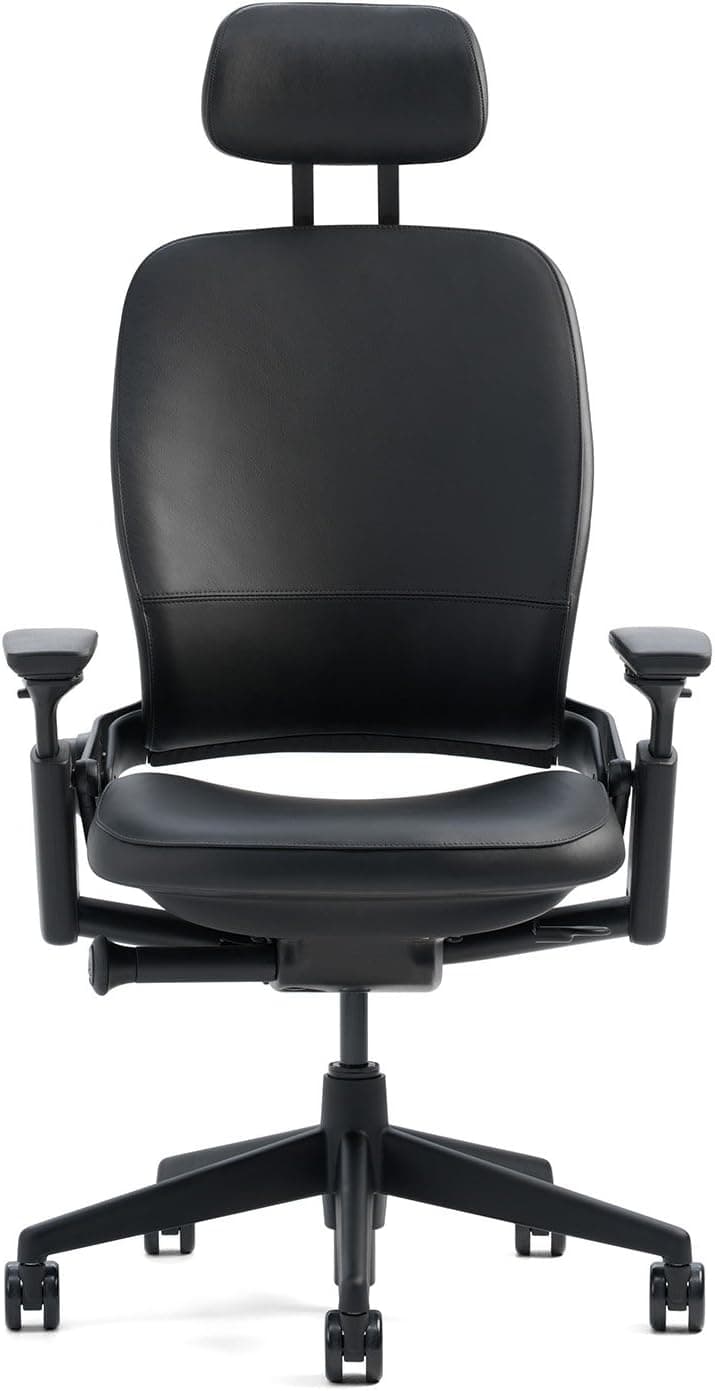
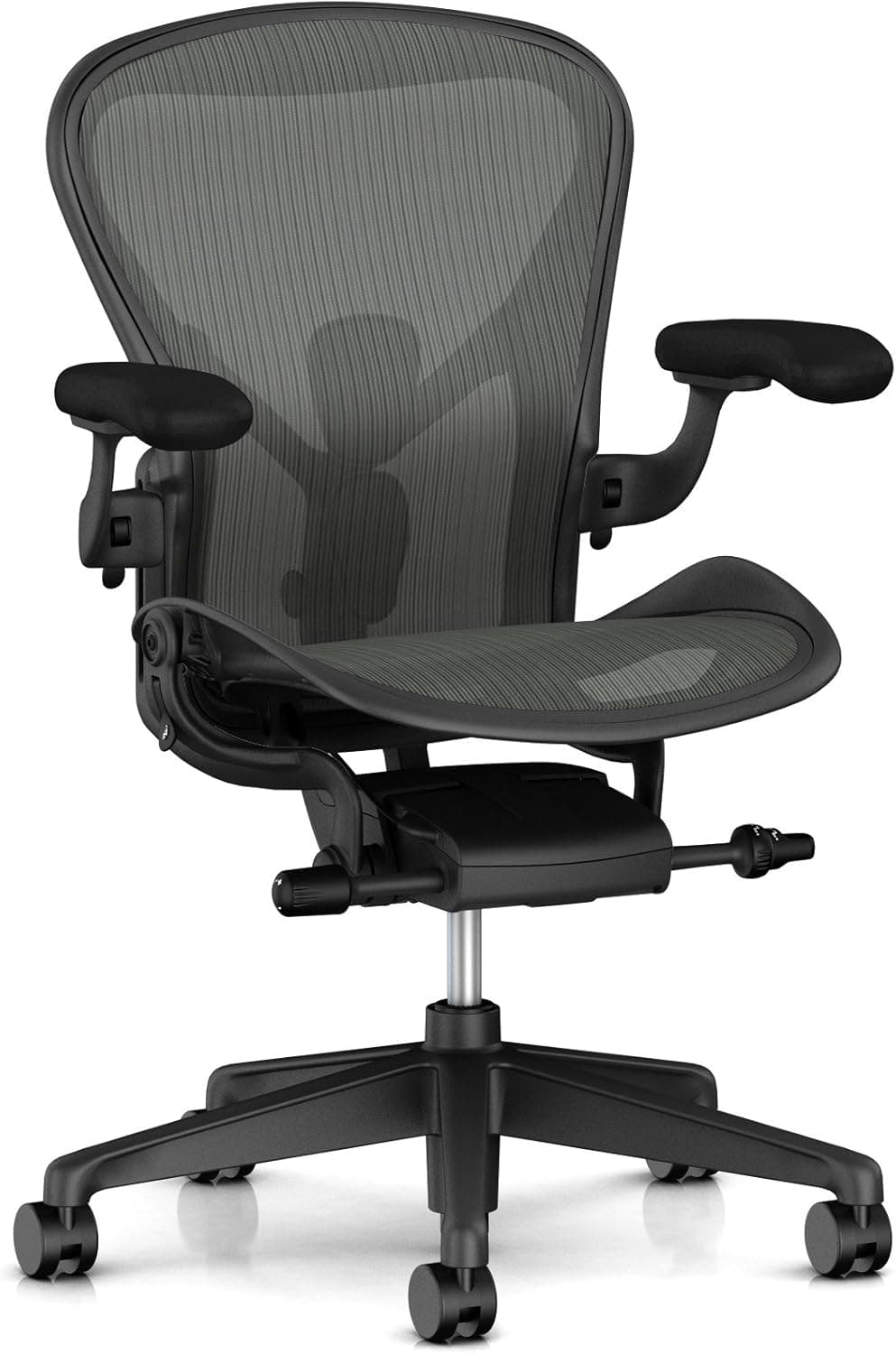
If you have done any serious research into premium ergonomic chairs, you have already encountered these two names. The Steelcase Leap and the Herman Miller Aeron are the two chairs that come up most consistently when ergonomics professionals, occupational health specialists and experienced home office workers are asked what they actually recommend.
Both chairs cost over a thousand dollars. Both are backed by 12-year warranties. Both are manufactured to commercial office standards and designed to last well over a decade of daily use. Both are legitimately excellent products.
So why does one exist when the other already does? Because they are built around fundamentally different ideas about what makes a chair ergonomic and those differences make each one a better fit for a specific type of user.
This comparison breaks down every meaningful difference between the Steelcase Leap V2 and the Herman Miller Aeron, so you can make an informed decision rather than guessing which premium investment is right for you.
Quick Comparison: Steelcase Leap V2 vs Herman Miller Aeron
Feature | Steelcase Leap V2 | Herman Miller Aeron |
Price Range | $1,295 to $1,595 | $1,395 to $1,795 |
Seat Material | Fabric or leather upholstery | 8Z Pellicle Mesh |
Back Material | Fabric with LiveBack technology | 8Z Pellicle Mesh |
Lumbar Support | LiveBack with adjustable lower back firmness | PostureFit SL (sacrum and lumbar) |
Seat Depth Adjustment | Yes | Yes |
Armrests | 4D | 4D |
Recline Range | Up to 116 degrees | Up to 124 degrees |
Weight Capacity | 400 lbs | 350 lbs (Size C) |
Warranty | 12 years | 12 years |
Headrest | Not included, limited aftermarket | Not included, aftermarket available |
Sizing | One size with wide adjustment range | Three sizes (A, B, C) |
Breathability | Moderate (fabric) | High (full mesh) |
Design Philosophy: Where They Differ Fundamentally
Understanding the design philosophy behind each chair is the key to understanding which one is right for you, because the differences are not just about specs. They reflect genuinely different answers to the same question: what does it mean to support a human body during sustained desk work?
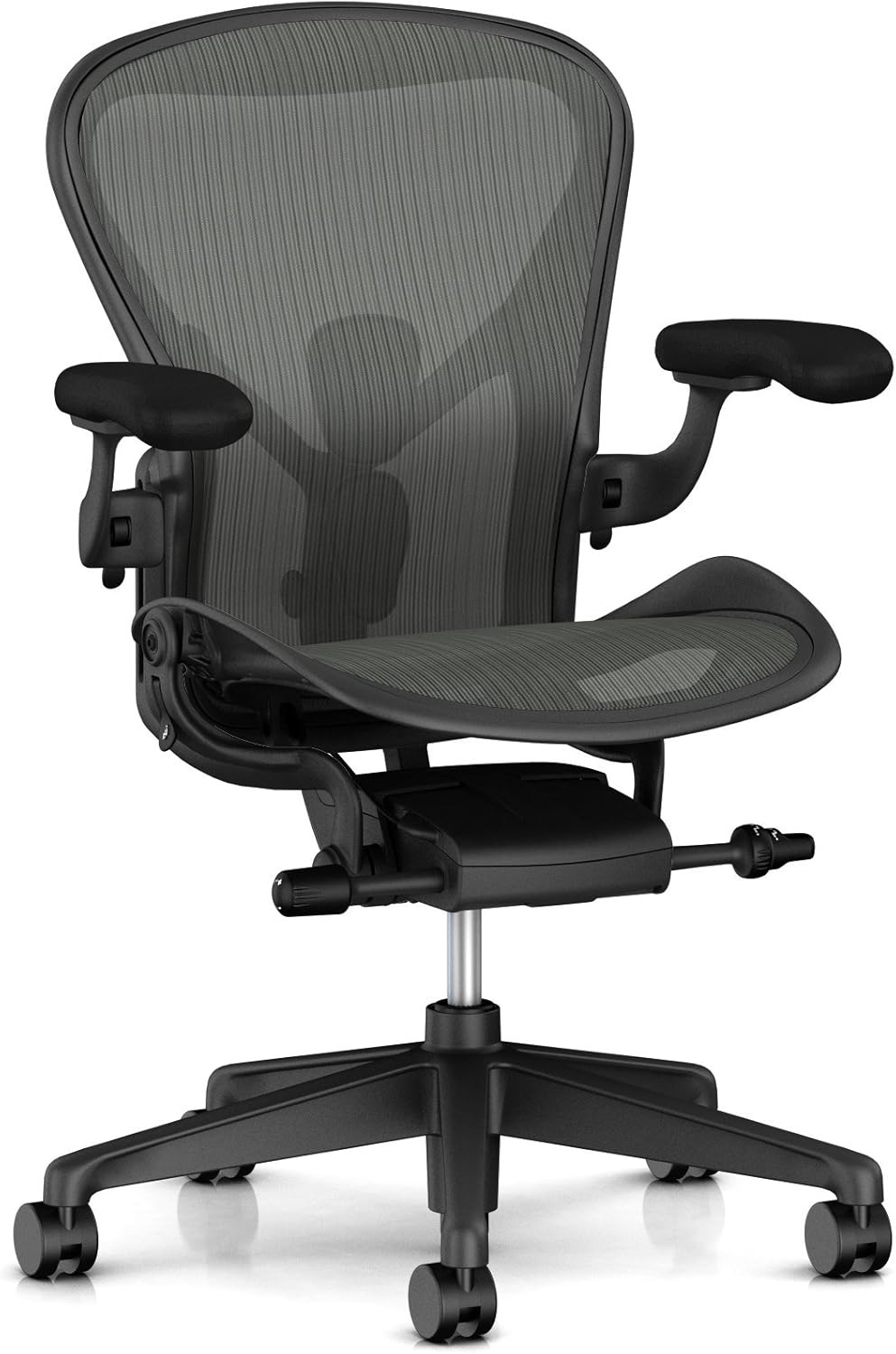
Herman Miller Aeron: Precision and Structure
The Aeron's design philosophy is built around precision support. Herman Miller spent years studying posture, spinal mechanics and sitting behavior before designing the Aeron and the result is a chair that offers very specific, highly adjustable support targeted at specific anatomical structures.
The PostureFit SL targets the sacrum and lumbar curve simultaneously. The 8Z Pellicle zones different mesh tensions to different body regions. The three-size system ensures the chair's proportions match the user's body proportions. Every element is deliberate and specific.
The Aeron works best when it is configured correctly for a specific user's body. When that configuration is right, the support is precise and consistent. The chair does not adapt to you so much as it holds you in a carefully calibrated supported position.
Steelcase Leap V2: Adaptability and Movement
The Leap was developed after Steelcase conducted its own extensive research into sitting behavior and what they found shaped the chair's entire design: people do not actually stay in one position while sitting. They shift, lean, twist, lean forward to read, lean back to think, cross their legs, uncross them and move constantly throughout a typical work session.
The Leap's LiveBack technology is the design response to that finding. The backrest flexes in two dimensions simultaneously, following the shape and movement of the spine rather than holding it in a single supported position. The lower back firmness control lets users adjust how assertive the lumbar zone of the back feels. The Natural Glide System allows the seat to move forward as you recline, keeping your relationship to your desk consistent as your posture changes.
The Leap adapts to you rather than requiring you to configure yourself into it. It is more forgiving of positional changes and more supportive across a wider range of postures than the Aeron.

Lumbar Support: Two Different Approaches
Herman Miller PostureFit SL
The PostureFit SL is the Aeron's most significant ergonomic feature. It consists of two independently adjustable pads: one targeting the lumbar curve and one targeting the sacrum below it. By supporting both points simultaneously, it prevents the posterior pelvic tilt that flattens the lumbar curve and causes most desk-related lower back pain.
The support is fixed in the sense that it does not move with you during posture changes. When you are sitting in the correct supported position, it is exceptionally effective. If your posture shifts significantly away from that position, the fixed support may no longer be engaged.
Steelcase LiveBack with Lower Back Firmness Control
The Leap's lumbar support is integrated into the LiveBack system rather than being a separate mechanism. The lower portion of the back, the lumbar zone, can be set to provide more or less resistance using the lower back firmness adjustment. As your posture changes throughout the day, the back flexes to maintain contact with your spine across different positions.
The lower back firmness control is a meaningful feature that the Aeron does not have. On a day when your back is particularly fatigued or painful, you can increase the firmness for more assertive support. On a day when you want a more subtle feel, you can reduce it. This adaptability is genuinely useful for users whose support needs vary.
Which Lumbar Support Is Better?
For users with consistent, focused posture who sit in a relatively stable position for most of the day, the PostureFit SL is more precise and more directly effective at addressing the sacral and lumbar support that prevents lower back pain.
For users who shift positions frequently, whose back pain varies in severity day to day, or who want support that adapts to their movement rather than requiring them to stay in a specific configuration, the LiveBack with firmness control is the more versatile solution.
Comfort and Breathability
Herman Miller Aeron
The Aeron's full mesh construction, seat and back, is its most significant comfort advantage over the Leap. The 8Z Pellicle allows constant airflow through the entire sitting surface, which means no heat buildup regardless of session length or ambient temperature.
For users in warm climates, workspaces without air conditioning, or anyone who runs warm during long work sessions, this is a practical quality-of-life advantage that accumulates significantly over a full working day. By hour six of a hot summer workday, the difference between sitting on mesh and sitting on fabric is immediately apparent.
The mesh also does not compress over time. The support characteristics of an Aeron from its first year of use are essentially the same as those of an Aeron after ten years of daily use, which is not something any fabric or foam surface can claim.
Steelcase Leap V2
The Leap uses fabric upholstery over a flexible backrest rather than mesh and a fabric or optional leather seat. The fabric is breathable to a degree, but it does not approach the ventilation of open mesh. In warm conditions or during extended sessions, the Leap accumulates heat more than the Aeron.
What the Leap offers in comfort terms is immediate, familiar cushioning. The fabric seat and back feel more like conventional furniture than the Aeron does and users who find mesh initially uncomfortable will typically settle into the Leap more quickly.
The Leap also handles a wider range of body movements comfortably without requiring re-adjustment because the LiveBack follows posture changes automatically. Users who shift positions frequently may find the Leap more comfortable in practice because the support stays engaged across positions, while the Aeron's support is most effective when the user is in its calibrated position.
Adjustability
Both chairs offer comprehensive adjustment ranges, but the nature of what is adjustable differs in ways that matter.
Herman Miller Aeron Adjustments
The Aeron offers seat height, PostureFit SL lumbar positioning, forward tilt, back recline angle and tension and 4D armrests. The three-size system means that the chair's overall proportions are matched to the user's body size rather than relying entirely on adjustment range to accommodate everyone.
The adjustments on the Aeron feel precise and refined. Each mechanism operates smoothly and holds its setting reliably. The quality of the adjustment hardware reflects the overall premium build standard.
Steelcase Leap V2 Adjustments
The Leap offers seat height, seat depth, natural glide forward tilt, back recline with tension, lower back firmness, upper back force and 4D armrests. The lower back firmness and upper back force controls are unique to the Leap and not available on the Aeron in any form.
The upper back force control adjusts how much resistance the upper portion of the backrest provides, which affects how firmly it holds you upright versus allowing you to lean back. Combined with lower back firmness, this gives you independent control over how the upper and lower portions of the back behave, which is a level of adjustability the Aeron does not match.
Weight Capacity and Size Range
The Leap V2 supports up to 400 lbs and comes in a single size with an adjustment range that covers users from approximately 5'0" to 6'5". The broad adjustment range makes it accessible to a wider range of body types without requiring size selection.
The Aeron supports up to 350 lbs in the largest Size C configuration. The three-size system serves users at the extremes of the height range better than a single-size chair, but it requires correct size selection to deliver its benefits. Users over 350 lbs will find the Leap a structurally more appropriate option.
Durability and Long-Term Value
Both chairs are backed by 12-year warranties and built to commercial office standards. The differences in long-term value come down to two factors: material degradation and resale value.
The Aeron's mesh does not compress or degrade in the way fabric and foam do. The 8Z Pellicle maintains its tension and support properties over years of daily use, which means the chair's ergonomic performance is as consistent in year ten as it was in year one. Fabric and foam seat surfaces, like those on the Leap, do gradually compress and wear, though the Leap's commercial-grade materials do so more slowly than budget alternatives.
Both chairs hold strong resale value in the used market. Refurbished Aerons and Leaps are available from commercial furniture dealers at significant discounts from new pricing while still delivering excellent performance. Buying either chair refurbished is a legitimate option that substantially improves the value proposition.
Who Should Buy the Steelcase Leap V2
The Leap V2 is the right choice for users who move frequently while working, whose sitting position changes significantly throughout the day, who find that static lumbar support loses contact when they shift position, or who want the additional control of independent upper and lower back force adjustment.
It is also the better choice for users over 350 lbs, for whom the Leap's higher weight capacity makes it a more appropriate structural fit. And for users who prefer the feel of fabric over mesh or who work in cool environments where mesh breathability is not a priority, the Leap's upholstered surfaces will feel more familiar and comfortable from day one.
Who Should Buy the Herman Miller Aeron
The Aeron is the right choice for users who maintain relatively consistent working postures, who need targeted sacral and lumbar support through the PostureFit SL, who work in warm conditions where breathability is a significant comfort factor, or who want the most durable long-term investment in ergonomic seating.
It is also the right choice for users who have existing lower back pain and want the most precisely targeted lumbar support available. The PostureFit SL's sacral plus lumbar approach is more directly effective at preventing posterior pelvic tilt than any other lumbar system on the market.
Final Verdict
If you sit in a relatively consistent position and want the most precisely targeted lumbar and sacral support available, buy the Herman Miller Aeron. If you move frequently, shift positions constantly, or want dynamic support that adapts to your body throughout the day, buy the Steelcase Leap V2.
Both are genuinely excellent investments that will serve you well for over a decade. Both represent the highest standard of ergonomic chair engineering available in 2026. The choice between them is not about quality but about fit and the right fit is the one that matches how you actually work.
If you are not ready to commit to the premium tier, explore the mid-range options and head-to-head comparisons linked below before making a final decision.
Disclosure: This post contains recommendations based on research and expert analysis. Some links may be affiliate links.

Written by
Alex Rivera
I'm Alex Rivera, a certified ergonomics consultant with over 8 years of experience helping remote workers build healthier, more productive home office setups. I've personally tested hundreds of ergonomic chairs, height-adjustable desks, and standing desk accessories, and I know firsthand how much the right setup can change your workday. My background in occupational health means I don't just look at specs. I evaluate how a product actually supports your posture, reduces fatigue, and protects your body over the long term. Whether you're setting up your first home office or upgrading your current one, I'm here to help you invest wisely in your comfort and productivity.
Written by
Alex Rivera
I'm Alex Rivera, a certified ergonomics consultant with over 8 years of experience helping remote workers build healthier, more productive home office setups. I've personally tested hundreds of ergonomic chairs, height-adjustable desks, and standing desk accessories, and I know firsthand how much the right setup can change your workday. My background in occupational health means I don't just look at specs. I evaluate how a product actually supports your posture, reduces fatigue, and protects your body over the long term. Whether you're setting up your first home office or upgrading your current one, I'm here to help you invest wisely in your comfort and productivity.